AI Is Hitting a Wall — And It's Not an Engineering Problem
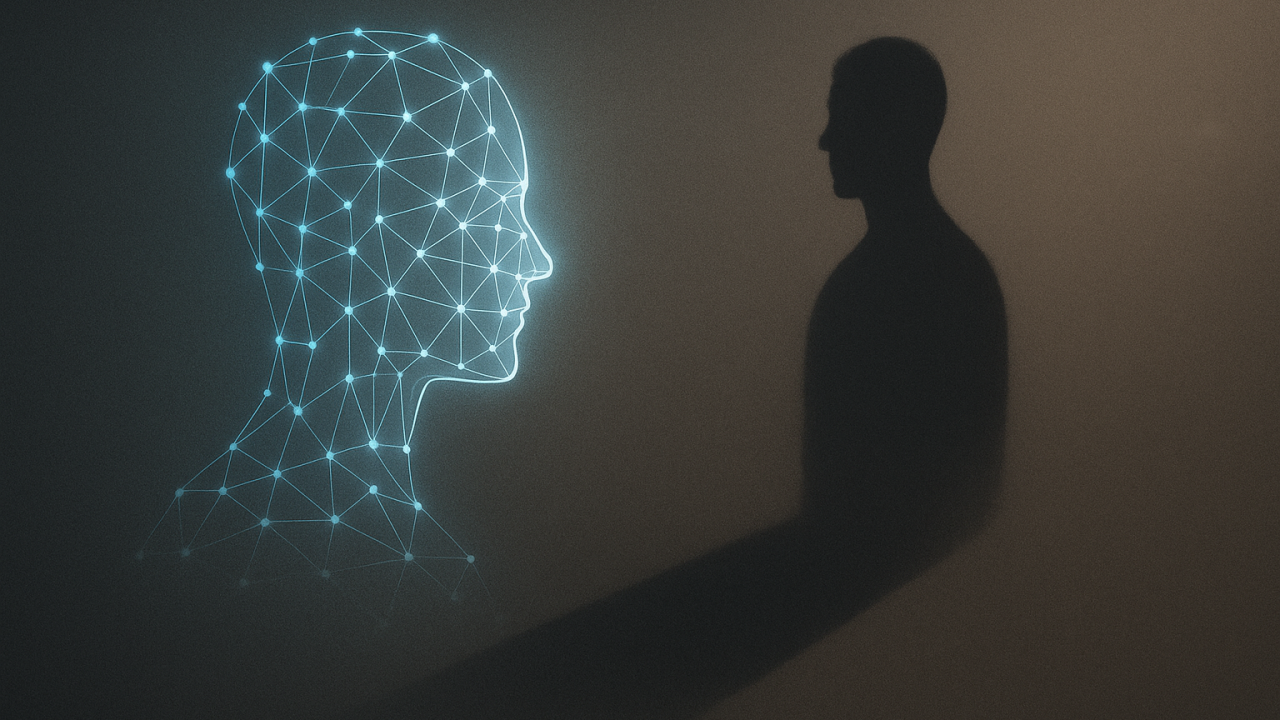
There's a growing belief in the AI world that if we simply scale models far enough — more data, more compute, more parameters — we will eventually reach real intelligence.
But there's a fundamental problem hiding in plain sight:
Neural networks don't create explanations. And without explanations, there is no real knowledge.
Before going further, it helps to name what this actually is.
🛠 The Hidden Assumption: AI Is Built on Instrumentalism
In epistemology, what a neural network does is called instrumentalism. In simple terms: AI might solve a differential equation but have no idea what the underlying theory is. It doesn't understand the concepts — it just finds a pattern that fits.
It's curve-fitting with extraordinary power, but still curve-fitting.
A quick side note: Instrumentalists claim that explanations aren't necessary in science — only good predictions are. That view has long been debunked, but it still quietly shapes how modern AI is built.
🔥 The Core Issue: AI Doesn't Understand What It's Doing
Today's AI systems are astonishing pattern machines. They spot correlations, compress them, and generate new patterns.
But they do not:
- understand why anything is true
- form hypotheses about the world
- check their own reasoning
- notice when their worldview contradicts itself
- create new theories or explanations
They don't know what their outputs mean. They only optimize for what fits the data.
That's not knowledge creation — it's statistical mimicry.
And this leads to three deep, structural barriers.
🚧 Barrier #1: Pattern-Learning Can't Produce Explanations
You can feed a model the entire internet and it will still only learn correlations. But the leap to understanding why something is true is not something pattern recognition can ever produce.
Real understanding requires explanations — ideas about how the world works and why things happen. No current AI system generates these.
This is not a scaling problem. It's a category problem.
🚧 Barrier #2: AI Cannot Criticize Its Own Ideas
Human knowledge grows through error correction. We make guesses, test them, find contradictions, and improve.
A neural network does none of that. It cannot:
- propose a theory
- define what would prove it wrong
- detect contradictions
- repair its worldview
- replace a bad idea with a better one
It only nudges its internal weights to reduce loss — blindly. That's optimization, not reasoning.
🚧 Barrier #3: AI Cannot Make the Big Explanatory Leaps
Ask today's AI to invent special relativity, evolution, or thermodynamics from scratch, and it can't do it.
Not because the models aren't big enough.
But because these breakthroughs required new explanations that didn't exist in any data.
Current AI only rearranges what it has already seen. It cannot generate the kind of universal, open-ended theories that allow humans to cross conceptual boundaries and transform entire fields.
🌌 So Does This Mean AGI Is Impossible?
Not impossible — but not with our current approach.
Bigger models won't magically start creating explanations. More data won't give them the ability to understand. More compute won't produce curiosity, criticism, or truth-seeking.
To reach real artificial intelligence — the kind that can make new discoveries rather than remix old ones — we need a fundamentally different paradigm.
🧬 The Human Precedent: How Sapiens Broke Out of Animal Intelligence
For hundreds of thousands of years, human ancestors behaved like every other animal: pattern-recognition, instinct, mimicry, tradition.
Then — suddenly and explosively — Homo sapiens sapiens crossed a cognitive threshold no other species had:
- we began generating explanations
- we invented counterfactuals
- we imagined things that did not exist
- we criticized our own ideas
- we built open-ended theories of how the world works
Nothing else on Earth has done this.
Not because of larger brains (not whale-sized brains, not elephants, not Neanderthals) — but because humans stumbled upon a universal method of knowledge creation: conjecture → criticism → better explanation.
This is the shift AI has not yet made.
🔮 What Might a Real Explanatory AI Look Like?
We don't know exactly — but we can outline the direction:
- It will need the ability to invent hypotheses, not just autocomplete them.
- It will need a built-in mechanism for error detection and self-criticism.
- It will need internal models that are coherent, falsifiable, and improvable.
- It will need to simulate "what if the world were different?" rather than extrapolate from what it has seen.
- It will need something like an internal evolutionary process for ideas — not optimization, but explanation selection.
And this is the paradigm shift the field has not yet confronted.
🎯 The Real Challenge for AI Research
Today's AI is breathtaking in capability. But it is still resting on the same assumption: that prediction is enough.
Breaking this assumption is the next great frontier.
The machines of the future won't just tell us what usually happens. They will tell us why the universe is the way it is — and propose new explanations we've never imagined.
To build that, we'll need more than data and compute. We'll need to rebuild AI around the one thing that has ever created unbounded knowledge: the explanatory imagination.
🤓 Bonus: Why "Thinking" AI Agents Still Don't Cross the Explanatory Barrier
Some of today's AI agents look like they can reason, self-reflect, or even critique their own answers. They produce "thought traces," revise earlier steps, and justify decisions.
This creates a powerful illusion. But here's what is actually happening underneath:
- the "thinking" text is generated after the answer
- the "critique" is just another prediction step
- the "reflection" is a retrieval query against context
- the agent is not forming a theory, only refining a pattern
None of this involves the model criticizing its own ideas, identifying contradictions, or replacing a bad theory with a better one. It's just the same statistical engine running again with more context.
They give us better tools, smoother workflows, and more convincing reasoning performances.
But they are still performances.
The underlying model is still pattern-matching, not explanation-making.
And until we cross that line, scaling will make AI more useful — but not more intelligent.